

The below is a selection from a blog originally published by PHI’s Berkeley Media Studies Group.
by: Heather Gehlert
Most journalists want to report on domestic violence in ways that inform the public without causing further harm to survivors and their loved ones. But doing that well isn’t always straightforward — especially when it comes to centering survivor experiences.
This tension may underlie a key gap in coverage: A news analysis from Berkeley Media Studies Group found that between 2023 and 2025, just one in five California news stories about domestic violence included a quote or anecdote from a survivor.
“This missing perspective is critical,” said Rachael Kagan, director of communications and public affairs at Blue Shield of California Foundation, which supported the research as part of a larger effort to improve reporting on domestic violence. “We can’t expect the public to fully understand the scope of the problem, let alone what solutions are possible, if we aren’t hearing from the people who are most directly affected. Now that we know just how underrepresented survivor voices are, we can work with journalists to make coverage more inclusive.”
To learn more about the new research findings, their implications for domestic violence news narratives, and how reporters can include survivor voices safely and responsibly, I spoke with Pamela Mejia, lead author of the analysis. Responses have been lightly edited for length and clarity.
Advocates and people in the field have known for a long time that domestic violence tends to be under-reported, certainly compared to its actual prevalence. And when it is reported, some real opportunities are lost to bring the full picture forward of what domestic violence is, how it affects families, how it affects communities, and what needs to happen to prevent it — and support people who’ve experienced it. So I knew that there was going to be an absence of some kind, but I was taken aback by how stark it was.
My immediate reaction was to wonder what stories aren’t being told if domestic violence survivors are really absent from the coverage. What do we not learn about the full truth of domestic violence and its impact on families and communities if the people who are most directly impacted — the people who are closest to not only the experience of domestic violence, but also the services and systems that can help address and prevent domestic violence — if they’re not part of the story?
Important nuances get lost when survivors are not part of the story. For one thing, statistics can paint a picture of domestic violence, but people’s understanding of the issue is limited when we don’t hear more about the range of experiences that comprise domestic violence, from coercion and emotional and verbal abuse all the way up to more explicit and extreme acts of physical abuse or even death.
Stigma is also an issue. If survivors aren’t allowed to tell their own stories, some of the well-documented patterns of stigmatizing language and framing that we know tend to be part of news coverage of domestic violence, those aren’t challenged. We know from decades of research that domestic violence reporting historically tends to minimize harm by characterizing incidents as, for example, a fight that got out of hand, or suggesting that there was blame on both sides of an incident. And when survivors don’t get a chance to share their experiences, that kind of implicitly stigmatizing language goes unchecked and uncorrected.
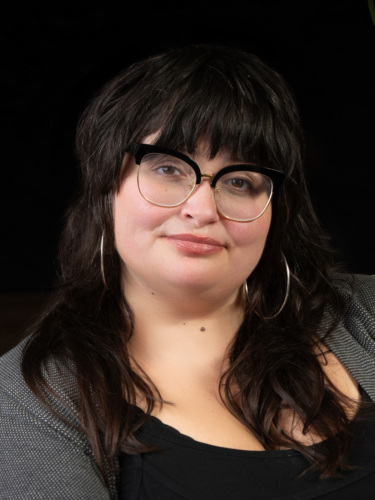
The other thing I would say is that survivors are not only experts in the trauma of what happened to them; survivors also know best what can help prevent domestic violence from happening. They know best what their families need to heal, and they know best how the services and supports in our state succeed or fail the survivors and the families who need them the most. Including survivors gives us a deeper understanding of what we need to do as families, as communities, and as a state to treat and prevent domestic violence.Pamela Mejia, MPH, MS
Associate Program Director and Director of Research, Lead Analysis Author
PHI’s Berkeley Media Studies Group
We did find a few examples, which are highlighted in the report, where survivor’s voices were included. And I think the strongest examples were the ones that touched on the duality that I named, not only painting a fuller picture of the problem but also highlighting the lived wisdom of people advocating for solutions. These stories brought some texture and lived experience to the realities of what domestic violence means, how it impacts families — that it’s not just a private family issue that we can turn away from, but actually something that affects whole communities and has far reaching and long-ranging impacts. The strongest examples of survivor voices were also ones where people were able to talk about what they had needed or what worked or didn’t work for them in seeking support, in getting out of a bad situation, in taking care of their children and themselves.
Read the full blog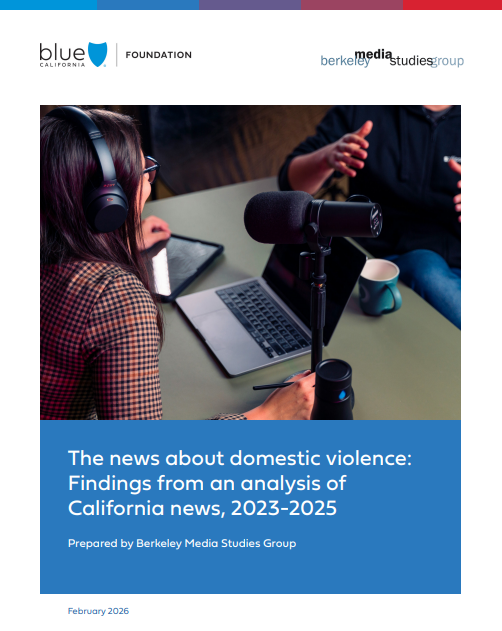
This report published in partnership by PHI's Berkeley Media Studies Group and the Blue Shield of California Foundation examines the state of recent news media focusing on domestic violence, how that coverage shapes perception of the topic, and provides recommendations for telling a more complete story.
Originally published by Berkeley Media Studies Group
You change the world. We do the rest. Explore fiscal sponsorship at PHI.
Together, we can accelerate our response to public health’s most critical issues.
Begin your career at the Public Health Institute.