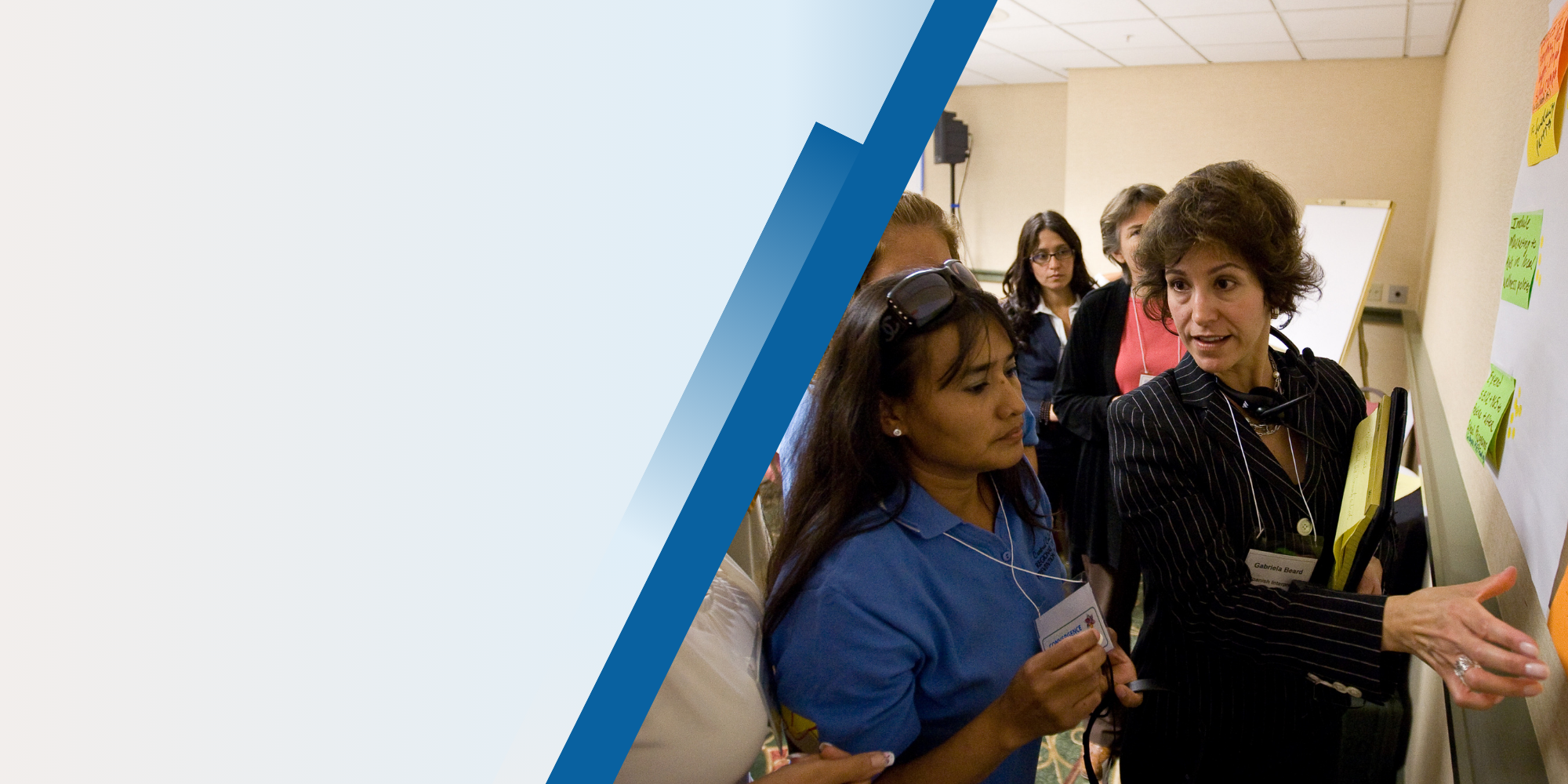
PHI programs deliver strategic guidance and hands-on support to help organizations build lasting capacity, enhance effectiveness and drive meaningful change. Whether supporting program implementation, addressing challenges or developing long-term strategies, PHI programs deliver tailored solutions. Through this hands-on assistance, programs help build lasting capacity—equipping partners with the tools, strategies and confidence to lead sustainable change.

PHI's Berkeley Media Studies Group has extensive experience in research, training and technical assistance related to communicating about challenging social, political and economic issues, that shape health. Contact Rachel Shewmaker to learn more.

PHI's Bridge Center prepares physicians, physician assistants, and nurse practitioners to employ the CA Bridge module of low-barrier access to life-saving addiction treatment, including treating opioid use disorder with buprenorphine or methadone, methamphetamine and stimulant use disorder treatment, alcohol use disorder treatment, youth and perinatal specific treatment, managing pain with alternatives to opioids (ALTO) and more. Contact Casey Alrich to learn more.
PHI's Center for Collaborative Planning (CCP) promotes health, equity, and social justice by partnering with community-based organizations, government, and philanthropic agencies to catalyze change and improve outcomes for vulnerable populations. CCP creates inclusive spaces throughout collective impact, leadership development, and training programs, and skillfully facilitate experiences that allow diverse people to work together successfully. Contact Connie Chan Robison to learn more.

PHI's Center on Disability is dedicated to improving the lives of people with disabilities through disability policy, civil rights, disability law, employment, health issues, independent living and emergency preparedness. The Center’s disability-related projects use expertise in research, technical assistance, training and information dissemination. Contact Paige Winget to learn more.
PHI's Cypress Resilience Project provides training to support the inherent resilience of individuals and communities who are managing trauma, experiencing grief and navigating mental health challenges. Trainings offered include Mental Health First Aid Certification (adult, youth and teen curricula) as well as workshops on trauma and grief. Contact Brooke Briggance to learn more.

PHI's FACES for the Future Coalition impacts students’ lives while helping to create the future health workforce needed for thriving communities. Coalition staff can help health systems and schools design effective education and workforce development programs for behavioral, clinical, and public health professions—and consult on best practices in youth development, industry engagement, and partnership strategies. FACES staff can also be hired to provide specialized work-based learning such as Career Days. Contact Amy Spade to learn more.

PHI Center for Health Leadership & Impact (CHLI) advances health by increasing leaders’ capacity to transcend boundaries and transform their communities. Through the use of blended learning modalities, CHLI leads programs for teams, coalitions and networks to advance leadership skills and reduce health inequities. Contact Karya Lustig to learn more.

PHI's Population Health Innovation Lab provides a wide array of services related to advancing health, well-being and equity and partners with funders, community-based organizations, government stakeholders or directly with communities to co-create solutions that move beyond symptoms to address root-cause issues. Contact Christina Olson to learn more.
PHI’s Prevention Policy Group works to advance health equity by advocating for policies and systemic changes that prioritize primary prevention of disease. The Prevention Policy Group's current efforts focus on shaping food, tobacco, cannabis and hemp policy, and securing sustained funding for community-based primary prevention and health equity initiatives. Contact Kiara Gonzalez Garcia to learn more.

PHI's Regional Asthma Management and Prevention (RAMP) Program aims to reduce the burden of asthma with a focus on health equity. Emphasizing both prevention and management, RAMP builds capacity, creates linkages and mobilizes networks to advocate for policy and systems changes targeting the root causes of asthma disparities. RAMP staff have over two decades of experience and expertise in reducing the burden of asthma with a focus on health equity. Contact Joel Ervice to learn more.
You change the world. We do the rest. Explore fiscal sponsorship at PHI.
Together, we can accelerate our response to public health’s most critical issues.
Begin your career at the Public Health Institute.