

The Public Health Institute’s Bridge program connects emergency care and community health to create an integrated system that improves health and equity. Produced with support from the Opioid Response Network, this Critical Access Toolkit was developed by experts in addiction medicine for clinicians, emergency medical services providers, hospital administrators, tribal leaders and people affected by substance use disorder, including opioid use disorder.
Explore the toolkit sections below to find resources, access to support and need-to-know information about medications for substance use disorder and strategies to prevent overdose deaths.
Medication treatment of substance use disorder has shown to reduce overdose deaths, and starting immediate treatment is life-saving. Emergency departments are a critical access point to care for many patients, especially those who are uninsured or lacking consistent access to health care. This toolkit for clinical teams provides quick facts about medications for alcohol and opioid use disorder, clinical protocols, training videos and more.
As first-line responders, emergency medical service (EMS) providers have the opportunity to alleviate withdrawal symptoms and help patients with substance use disorder begin life-saving medications shown to aid in recovery. This toolkit for EMS providers includes resources about medications for alcohol and opioid use disorder, training videos and more.
Medication is the best treatment for substances use disorder (SUD). SUD is prevalent in all communities regardless of income bracket, culture, race or age, but increasing access to medication treatment and reducing stigma has shown to save lives. This toolkit for patients and community members provides information for better understanding SUD, resources for accessing care and more.
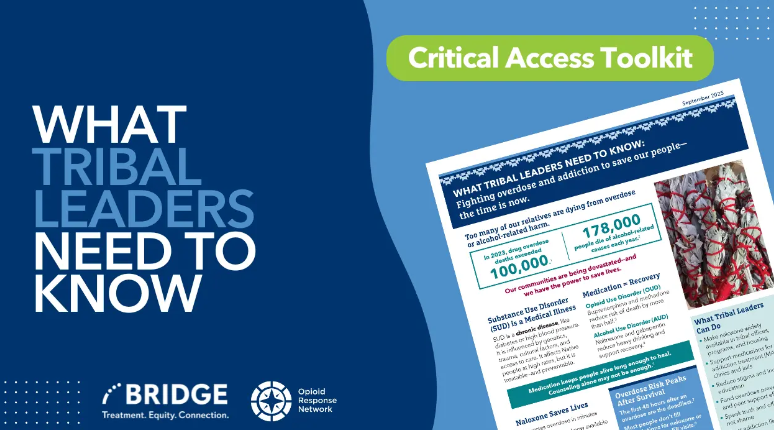
Substance use disorder (SUD) is a chronic disease that affects Native people at high rates, but it is treatable and preventable. This toolkit for tribal leaders provides a factsheet on SUD and available treatments, resources that honor indigenous healing practices and more.
Opioids are the leading cause of drug-related deaths in the U.S., but Naloxone reverses overdose within minutes and provides critical time for medical intervention. Despite its effectiveness, stigma and barriers to access limit the availability of this life-saving treatment. This toolkit provides specific guidance and resources for hospitals seeking to increase the distribution and accessibility of Naloxone.
Emergency departments (ED) offer a critical access point to care for people with substance use disorder (SUD). Medication treatment of SUD is evidence-based standard of care, and navigation services provide a holistic network that improves health outcomes while realizing cost savings. This toolkit provides resources for the Bridge model, ensuring low-barrier access to medication for SUD, ongoing care in the community and building a culture of harm reduction.
Originally published by Bridge
You change the world. We do the rest. Explore fiscal sponsorship at PHI.
Together, we can accelerate our response to public health’s most critical issues.
Begin your career at the Public Health Institute.